STRENGTHENING COLLABORATION ACROSS THE DIRECTED ENERGY COMMUNITY
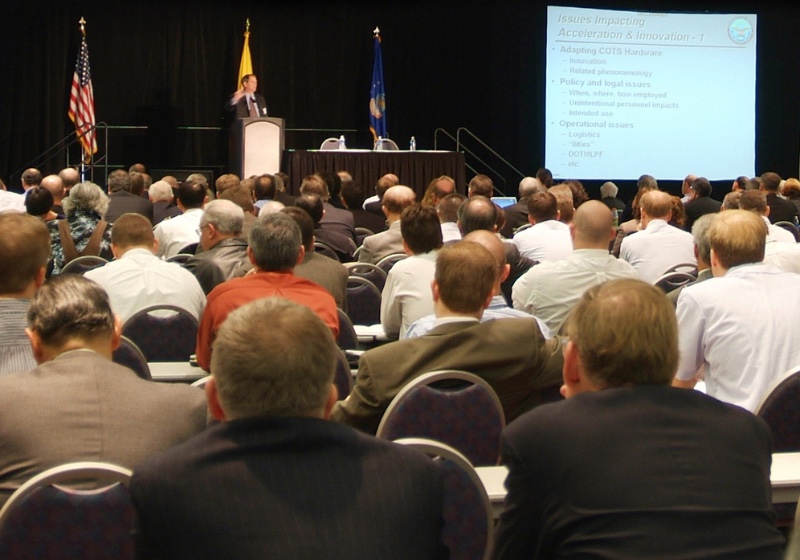
The 2025 Directed Energy Systems Symposium successfully brought together the scientific, operational, and acquisition communities to deepen collaboration and accelerate progress in directed energy (DE). Participants engaged in robust dialogue on recent testing activities, operational demonstrations, and emerging mission needs. This cross-community engagement helped ensure that new DE capabilities align with real-world challenges and warfighter requirements.
ADVANCING UNDERSTANDING OF LASER, MICROWAVE, AND SYSTEM-LEVEL TECHNOLOGIES
Key discussions centered on high-energy laser (HEL) and high-power microwave (HPM) systems, HEL components and beam control, and ongoing modeling, wargaming, and lethality studies. These themes resonated strongly across the audience, highlighting steady technical advancement and the growing maturity of DE systems. The event also identified gaps—such as airborne DE platforms and DE manufacturability—that are ripe for renewed focus in future programs.
ENGAGED PLENARY SESSIONS HIGHLIGHTED MOMENTUM AND STRATEGIC DIRECTION

Plenary sessions were a major highlight, featuring timely and relevant briefings that drew significant audience engagement. Presentations on the DoW DEW Roadmap and the Space Warfighting Framework provided clear strategic context for ongoing investments across the services. Afternoon panel sessions exceeded expectations, with highly knowledgeable contributors fostering energetic exchanges with attendees.
A CLEAR PATH TO ADDRESSING DEPLOYMENT BARRIERS
Across the technical and programmatic sessions, participants repeatedly emphasized the need to overcome persistent barriers that constrain near term DE deployment. Themes included power scaling, atmospheric compensation, target tracking, system integration, and industrial base capacity. Stakeholders broadly agreed that coordinated investment, streamlined acquisition, and strengthened partnerships among government, industry, and academia remain essential for transitioning DE capabilities from the lab to the field.
EMERGING OPPORTUNITIES IN AIRBORNE, SPACE, AND SUSTAINMENT-FOCUSED DE TECHNOLOGIES
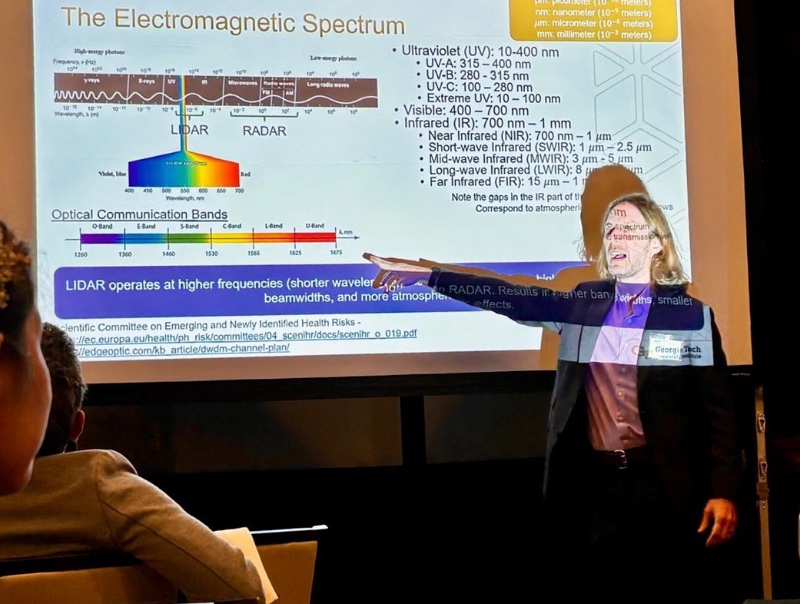
The symposium highlighted several emerging opportunities that are gaining urgency in today’s threat environment. These include advancing airborne DE systems to support layered defense architectures, improving manufacturability and sustainment to meet real-world operational needs, and accelerating research into DE applications for space. These areas represent high-potential paths for future research, investment, and collaboration.
ACTIONABLE GUIDANCE FOR INTEGRATING DE INTO FUTURE OPERATIONS
Participants emphasized five critical actions for stakeholders seeking to advance DE adoption: integrating DE capabilities into existing force structures; strengthening multi-sensor target acquisition and tracking; expanding operator training; establishing clear rules of engagement; and addressing ethical and legal considerations early. These principles provide a practical foundation for responsibly and effectively deploying DE capabilities to support national defense.
A COMMUNITY WELL POISED AND ACCELERATING INTO THE FUTURE
The Symposium demonstrated that the DE community remains strong despite several challenging years. The event reaffirmed the value of DEPS as a trusted venue for sharing classified and controlled unclassified information, strengthening networks, and facilitating collaboration among government, military, industry, and academia. With increasing participation and momentum, the community is well positioned to accelerate the advancement of directed energy capabilities and address the mission needs of today and well into the future.